


Blog
What Makes a Germany Soccer Jersey a Global Icon?


A Comprehensive Deep Dive into the World of the Die Mannschaft Kit
The Germany soccer jersey is not merely an article of athletic apparel; it is a profound symbol of footballing excellence, resilience, and a distinctive national identity that has captivated fans and collectors across the globe for decades. Within the realm of football kits, the jerseys worn by Die Mannschaft—the German national team—hold a unique and revered status. These shirts chronicle a rich history of four FIFA World Cup titles and three UEFA European Championships, marking them as some of the most successful and recognizable garments in sports history.
From the simple, heavy cotton shirts of the post-war era to the technologically advanced, sustainably-made uniforms of today, the evolution of the Germany soccer jersey is a fascinating study in design, culture, and material science applied to the demanding sport of football. This comprehensive analysis will delve into the elements that elevate this jersey beyond typical merchandise, offering valuable insights for the dedicated fan, the discerning collector, and the curious consumer interested in the intersection of fashion and sport performance.
The Defining Characteristics and Design Evolution
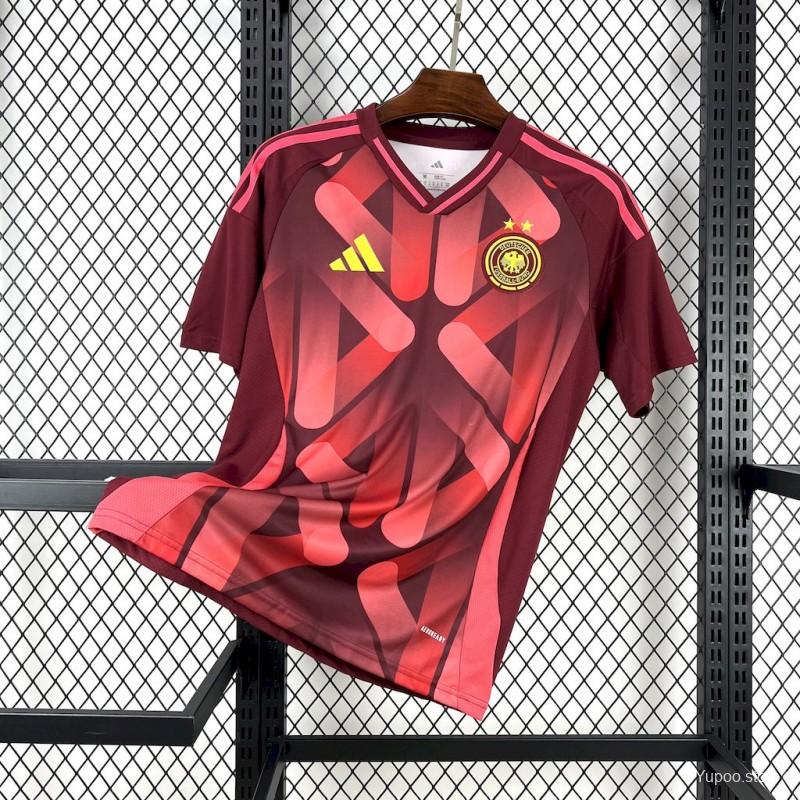
The design of the Germany soccer jersey is characterized by its powerful simplicity and the consistent use of the nation’s traditional colors: white (for the home kit) and black. This clean aesthetic allows the jersey to maintain a timeless quality, yet each iteration successfully integrates subtle design cues that reflect the contemporary culture or historical moments of the time.
The Iconic Home Kit: A Canvas of Tradition
The home jersey is almost invariably white with black accents, echoing the colors of the pre-war German flag and the current flag’s main colors. A pivotal design feature, however, has often been the interpretation of the German flag’s black, red, and gold, typically appearing in trim, cuffs, or—most famously—in the graphic elements across the chest.
- Design as a Statement: Perhaps the most globally recognized design is the 1990 World Cup jersey. This kit featured a striking, abstract tricolor geometric pattern (in black, red, and and gold) across the shoulders and chest. This design wasn’t just visually stunning; it became an emblem of reunification, worn as West Germany achieved its final World Cup victory just before the country’s political landscape was transformed. As a result, this particular germany soccer jersey model is continually sought after and reinterpreted in modern designs, serving as a powerful link to a celebrated past.
- Emphasis on the Crest: The German Football Association (DFB) crest, with its distinct eagle motif and the four stars symbolizing the World Cup victories, is always prominently displayed. The presence and configuration of the stars are immediately evident to any football enthusiast, signifying the team’s elite status.
The Role of the Away Kit: Embracing Boldness
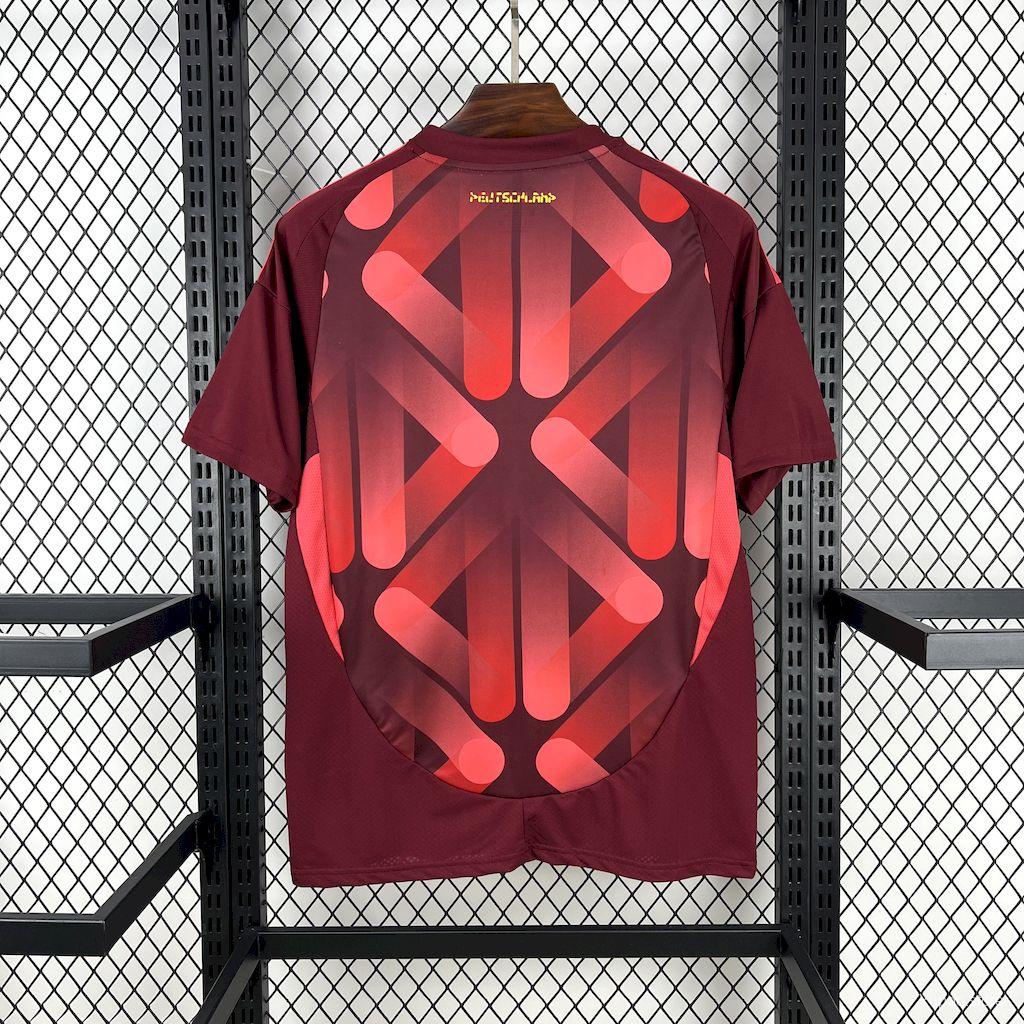
While the home kit adheres to strict traditional principles, the away kit provides a canvas for greater design experimentation. Historically, the away shirt has frequently been green—a color associated with the German national team’s first official change kit and one that often complements the national flag’s colors. More recent designs have explored shades of gray, black, or even a vibrant red, allowing the manufacturer to incorporate modern trends and provide a distinct contrast to the classic white. These away kits often allow for a stronger emphasis on contemporary graphic patterns or bold color blocking, catering to a broader consumer market seeking fresh and stylish football-inspired wear.
Manufacturing and Technological Advancements in Kit Design
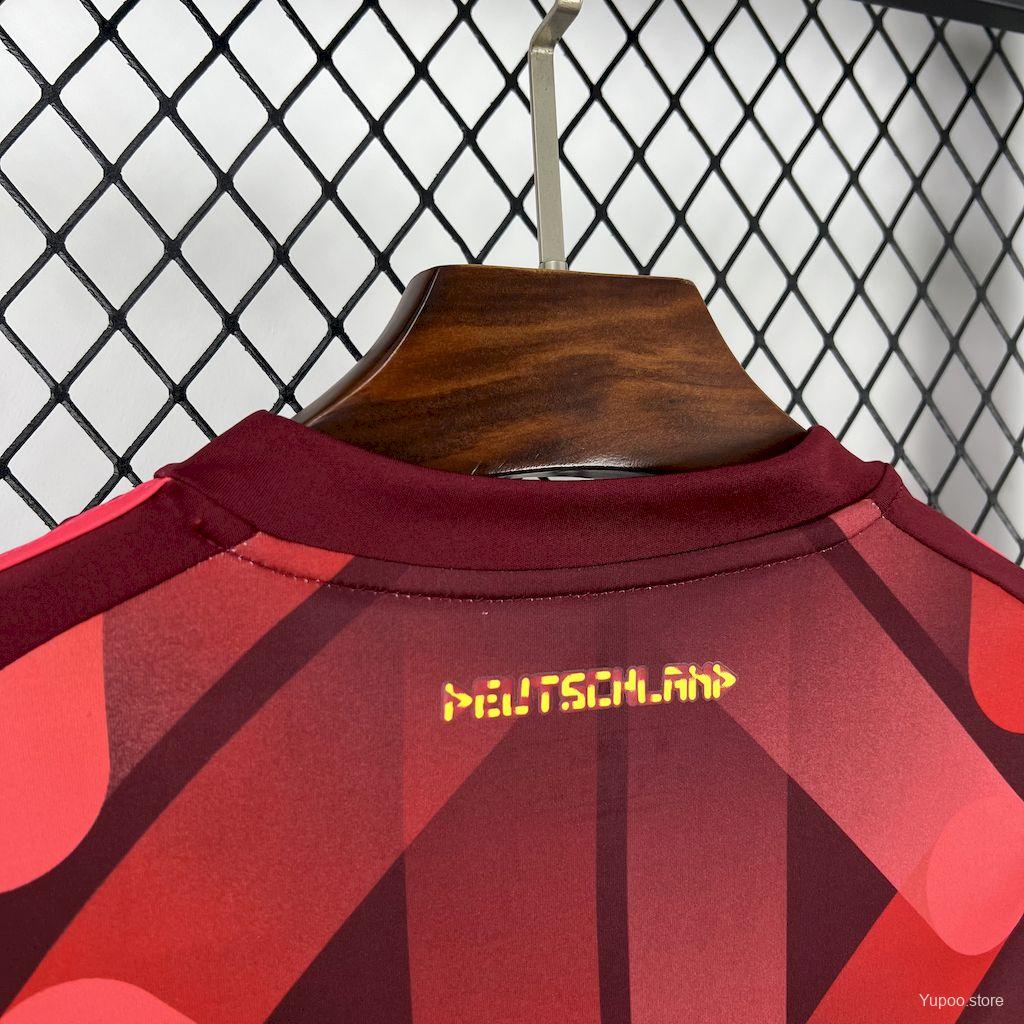
The function of a modern Germany soccer jersey extends far beyond mere identification; it is a piece of high-performance sportswear engineered to give players a competitive edge. The shift in manufacturing has been drastic, moving from heavy natural fibers to sophisticated synthetic blends.
Performance and Fabric Technology
Modern football kits are defined by lightweight, moisture-wicking fabrics. The technology utilized ensures that sweat is rapidly drawn away from the skin and evaporated, regulating the player’s body temperature and reducing the material’s cling or weight, especially in humid conditions. This continuous innovation, often protected by proprietary technology names, is a key selling point for consumer versions. For the product user—the fan—this translates into a comfortable, breathable item suitable not only for supporting the team but also for personal athletic use.
Sustainability and Ethical Production
In recent years, the production of the Germany soccer jersey has increasingly focused on sustainability. Manufacturers have been utilizing recycled polyester, often made from plastic bottles collected from oceans and landfills, to construct the fabric. This movement is part of a broader, positive industry trend towards reducing environmental impact. Consumers are now often presented with “authentic” (player-worn specifications) and “replica” (more casual, less technological) versions, both of which often incorporate these sustainable materials, aligning the product with modern ecological values. This ethical approach is a critical part of the modern jersey’s narrative.
The Germany Soccer Jersey in the Collector and Fan Market
The appeal of the Germany soccer jersey transcends national fandom; it is a highly valued commodity in the global collector market. The sustained success of Die Mannschaft ensures a continuous demand for both current and vintage kits.
Valuing Vintage and Match-Worn Shirts
Certain jerseys appreciate significantly in value. Match-worn shirts, especially from major tournament finals or worn by legendary players like Franz Beckenbauer or Miroslav Klose, fetch premium prices due to their verifiable provenance and historical significance. The vintage market, however, is not limited to match-worn items. Shirts from World Cup winning years (1954, 1974, 1990, 2014) are considered cornerstone pieces for any serious collector. Due to the high demand for retro football apparel, retro germany soccer jersey styles are frequently re-released, catering to nostalgia and new generations of fans.
The Fan’s Connection: A Statement of Identity
For the regular consumer, purchasing a germany soccer jersey is an active expression of identity and support. These jerseys are worn worldwide, not only during major tournaments but also as casual streetwear. They are a universal language, connecting individuals who share a passion for German football, irrespective of their geography or background. This strong emotional attachment to the kit is the foundation of its sustained market value. Furthermore, the personalized option, where fans can add the name and number of a favorite player or their own custom details, deepens this personal connection to the product.
Correct Values and Cultural Significance
The design and presentation of the Germany soccer jersey are carefully managed to uphold positive cultural values. The jersey represents team effort, sportsmanship, and a commitment to excellence—values that the German national team consistently projects. Unlike kits from teams with controversial histories, the German jersey generally carries a narrative of disciplined play and international success built on robust structure and tactical brilliance. This consistent and professional image reinforces a positive brand identity globally, making the jersey a respected and aspirational purchase. The emphasis is always on the collective “Team Geist” (team spirit) rather than individual stardom, which is subtly communicated through the often clean and uncluttered design.
In conclusion, the Germany soccer jersey holds a pre-eminent position in the football kit landscape. Its enduring legacy is a blend of iconic, historically resonant designs, cutting-edge performance technology, a commendable commitment to sustainable production, and a powerful cultural resonance that appeals to a diverse, global audience. Consequently, it remains a pillar in the sportswear market, appreciated equally for its historical narrative and its technological sophistication.
Frequently Asked Questions (FAQ)
Q1: What are the main differences between an ‘Authentic’ and a ‘Replica’ Germany soccer jersey?
A: The primary differences lie in the materials and fit. The Authentic jersey is identical to the one worn by the players on the field. It features performance technology, a tighter, athletic fit, and heat-pressed crests and logos to reduce weight. The Replica jersey is designed for fan comfort and affordability, featuring a looser, more standard fit and usually embroidered crests and logos. Both versions generally share the same visual design and support for the national team.
Q2: Why are there often different colors for the Germany away kits?
A: While the home kit is almost always white, the away kit allows the manufacturer more flexibility for design and marketing. Historically, green was common. Modern away kits, however, change frequently to introduce new styles, cater to fashion trends, and ensure maximum contrast against opponents’ kits. These variations often aim to appeal to a broader consumer base looking for unique aesthetics.
Q3: How should I properly care for my Germany soccer jersey to maintain its quality?
A: To preserve the fabric, technology, and especially the printed numbers/names, it is strongly recommended that the jersey be washed inside out in cold water using a gentle cycle. Air drying is always preferred over machine drying to prevent shrinking and damage to the vinyl prints or heat-pressed elements. Avoid using harsh detergents or fabric softeners.